Creators Leeanne M. Krecic, Brandon Lee and producer Heather Horn break down the challenges of collaboration with Japanese studios, from character proportions and redesigns to culture-specific romance cues and etiquette.
Webcomic creator Leeanne M. Krecic, also known as “Mongie,” isn’t shy about her tastes in muscle-clad men, and her “Let’s Play” series speaks to that fact. But when it came to adapting her work into an anime and making the story’s three love interests appealing to Japanese audiences, Krecic had to say “sayonara” to the swole characters she’d created.
“Studio OLM and character designer Ebimo did a beautiful job, but they had a problem with my beefcake,” shares Krecic during last week’s SCAD AnimationFest Crunchyroll panel, “From Scratch to Screen: Adapting Written Novels and Comics for a Global Audience,” which was moderated by AWN and also featured “The Beginning After The End” webnovel creator Brandon Lee (or “TurtleMe”) and Crunchyroll producer Heather Horn.
Krecic continued, “The studios wanted the men svelte and slim. And I’m like, ‘Make them beefier!’”
In an interview with AWN following the panel, Horn added, “Leeanne and I requested that the studio, ‘Make Link’s shoulders broader. There should be more muscle. We want the face of an angel with the body of a god.' But we needed to give the anime staff and creators the license to tell us what makes something anime. We are not going to dictate to Japanese creators what is anime or not.”
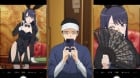
“Let’s Play,” whose anime adaptation releases on Crunchyroll today, October 1, follows a web developer named Sam who gets her big break with the release of her first game. But the celebration turns sour when a harsh review by YouTuber Marshall Law goes viral. Adding insult to injury, Marshall moves in next door, sparking an unexpected journey through gaming culture, viral drama, and romance, which also includes Sam’s barista friend Link and Young Technologies manager Charles Jones.
The anime is directed by Daiki Tomiyasu (Pokemon: Mezase Pokemon Master). Check out the trailer:
When Krecic started the process of adapting her story with Crunchyroll and OLM, she got a crash course in cultural differences between romance in the U.S. versus Japan.
“One of the biggest differences we thought was interesting was that, in Japan, it's considered flattering if somebody who fancies you moves in very close to you, or even into the same building, regardless of your feelings for them” shares Krecic. “It's considered very flattering and a fantasy for someone to see their crush and be like, ‘Why not move into the same building so I can engineer more encounters?’ That was something the Japanese teams thought would be fun to work into the adapted story.”
Krecic may have lost the battle for beef, but this new proposed change was one she didn’t think would translate well to American audiences.
“From the Western perspective, that’s an automatic red flag,” notes Krecic. “So, we left that out. But there were plenty of other changes we made.”
One was the placement of a well-endowed character’s business cards.
“There’s a character in the story named Monica who is a busty gal and stores her business cards in her cleavage and, when she would hand one to someone, they’d be like, ‘Wow. It’s warm,’” explains Krecic. “It was a running joke, but the Japanese studio was like, ‘You can’t do that.’”
Horn, who is known for her work on other Crunchyroll anime titles like Viral Hit, Fena: Pirate Princess and Metallic Rouge, had long since been educated on Japanese business card etiquette.
“There’s a ceremonial aspect to exchanging business cards in Japan,” notes Horn. “You present the card with two hands, whoever takes the card then looks it over and compliments the stationary, then the two of you sit at the table and arrange the business cards you’ve received in front of you so they help put a name to the face of the people sitting across from you. These cards are expected to be sanitary. You can’t pull them out of your back pocket like you’re pulling them out of your butt. And you definitely can’t store them in your chest.”
No to stalker admirers. Yes to sanitary business cards. Certain changes tracked fairly clearly with corresponding cultural differences. But there was more nuance to the changes of Let’s Play’s character designs.
“Depending on how you adapt a character, it can either be translated as sincere and romantic or comedic depending on their design,” says Horn.
Sam’s father, a larger-than-life man who is often crying over his wife or overreacting to misconstrued situations involving his daughter, is a prime example of a more comedic character design.
“There are exceptions,” says Horn. “But when we're talking about portraying a believable and sincere love interest in an anime, there are certain aesthetic and cultural expectations that carry over into the show’s artwork.”
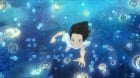
There are also certain expectations that accompany the look of leading males in a fantasy series like The Beginning After The End (TBATE). Lee’s webnovel, now an animated series on Crunchyroll, follows the life of the late King Grey after his untimely and mysterious death. Reborn as Arthur Leywin, he seeks to correct his past mistakes in the vibrant new continent of Dicathen, a world of magic and fantastical creatures, all while equipped with the knowledge of a powerful king. The adaptation is animated by Studio A-Cat.
Check out the trailer:
And, during the anime adaptation process, Arthur’s character design also got adjusted to enhance his eyes, style and stature.
“A lot of design effort went into making sure Arthur’s expressions could convey not just those of a child but also those of an adult, because the child is more of a facade," explains Lee. “A lot of other changes were more from a story perspective and relaying it in an anime format. But I do think the studio wanted to convey certain things more and highlight more compared to what was in the comics. So, for example, Arthur's relationship with his past self and how that reflects on his relationship with the current family he acquired through reincarnation. That wasn't as big of a stress in the novel or the comic as much as it is in the anime. So there have been some deliberate changes to highlight certain things that are important to the story narratively.”
Horn adds, “We’re really happy with the work that our character concept designers did with taking the American artwork and sensitively translating it to the anime. It’s not easy to make sure those characters are still identifiable and we’re really pleased with the questions they asked and the way they translated those characters. Those artists put their sincere heart into this.”
Both Lee and Krecic’s stories were also adapted narratively to encourage stronger cliffhanger moments, and character proportions were adjusted to suit a horizontal streaming screen as opposed to the longer proportions fitting to webcomics that are scrolled through vertically.
“I think there’s a misconception that the original creators are like the voice of God on these projects,” shares Krecic. “But we’re not. The director is the voice of God. But these studios still really cared about our voices. Never in a million years did I think I’d get this adaptation. I’ve cried a lot of happy tears during this process. Every time they would show me something new, someone would go, ‘She’s crying again.’ And then another person would say, ‘It’s ok. She’s happy.’”
Lee adds, “There are entire studios dedicating themselves to making sure these stories are a success. Honestly, when I was writing by myself and creating by myself, it sucked. It was a huge load to carry by myself and it’s been nice sharing that weight.”
Krecic is the first American female webcomic creator who's had her work turned into an anime in Japan. Meanwhile, Lee’s TBATE is the first webnovel to webcomic and then to anime adaptation.
Both creatives felt the pressure, but they also felt the possibility of what doors this could open for future creators.
“We want so badly to do this well because we want all of us to succeed,” shares Krecic, addressing both AWN and the SCAD student body. “I want this opportunity, that I’ve been fortunate enough to have, be an opportunity for everybody else in here.”
Before the end of the panel, Horn had one last piece of advice for creatives, whether students or faculty.
“Build your audience, build your fandom, and the studios will come knocking,” says Horn. “The streamers will come knocking. Then, get a good lawyer.”

Victoria Davis is a full-time, freelance journalist and part-time Otaku with an affinity for all things anime. She's reported on numerous stories from activist news to entertainment. Find more about her work at victoriadavisdepiction.com.