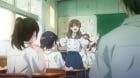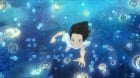
Cami Kwan shares the emotional debt she feels she owes in her heartfelt, stop-motion short about her great grandmother Joy Dep Chan, who immigrated from China to America in 1926 but was reluctant to reveal her story to anyone other than her great granddaughter.
Joy Dep Chan was a teenager when she immigrated to America from China in 1926. But the first person she shared her story with was her great granddaughter.
“My sister and I were a generation enough removed that my great grandmother would be fairly open with her coming-to-America story,” says Cami Kwan, Apartment D Films’ co-owner and head of production. “But when it came to my grandparents and even my father, my great grandmother wanted them to just be American. My dad was never taught Chinese because my grandparents and great grandparents didn’t want to instill in their kids an immigrant identity and have that impact the kids negatively.”
It was while listening to her late great grandma Chan’s stories that Kwan first learned of the term “Paper Daughter” and how some immigrants didn’t just leave their families and lives behind, but their true names as well, assuming the identities of those purchased for them. And it’s what inspired her upcoming stop-motion short film, Paper Daughter. The film is Kwan’s way of honoring her great grandmother’s Angel Island immigration story, rarely shared, as well as the stories of Paper Daughters, never shared.
“There’s almost no way for me to thank my great grandmother for what she’s sacrificed for us, but for the sacrifice of Paper Sons and Paper Daughters who came to America under the identities of people who died, it’s like you owe threefold,” says Kwan. “You owe your family for purchasing that identity. You owe the person who died because now their future is your family’s future, and you owe your ancestor for giving up their name to come here. You can never pay all that back.”
Except, maybe, by making a film about it. Kwan’s Paper Daughter, is a gothic Chinese fairytale that tells the story of a young Chinese woman named Joy who grapples with the guilt of using the identity of a deceased girl named Mae to immigrate to the United States through San Francisco's Angel Island in 1926. The film’s crowdfunding campaign ended this week, exceeding its goal.
Check out the campaign trailer:
“I feel really passionate about people knowing about Angel Island, because it's an important part of U.S. history, and it doesn't get the same amount of recognition as New York’s Ellis Island,” says Kwan. “People are often happy to hear about European immigration stories but not so much about Asian immigration. We're constantly othered and we're always foreign no matter what we do.”
She adds, “But we all have our own abilities and skills that we can use to help make the world better. And the thing I have is animation and storytelling. One of the ways that I can possibly repay my great grandmother and thank her is memorializing her experiences and the experiences of the people around her when she was at Angel Island and help other families who have history in Angel Island as well.”
Kwan and Paper Daughter are grantees of the 2025 Julia S. Gouw Short Film Challenge, hosted by the Coalition of Asian Pacifics in Entertainment (CAPE). CAPE champions diversity by educating, connecting, and empowering Asian American and Pacific Islander artists and leaders in entertainment and media. The Angel Island Immigration Station Foundation (AIISF) has also agreed to act as a historical consultant for the film and will be reviewing character and set designs and in-progress cuts.
“Puppet-wise, this is a large film,” shares Kwan. “There are a lot of characters so we are using wire armatures instead of ball-and-socket as well as 3D-printing so we can make things replicable, and speedily. But we’re also using dimensional fabrics. I felt very strongly about the hair looking super nice and super well done, so we’re going to lay embroidery thread for the hair. The costumes for the main character, Joy, and for the soldiers have to be pretty historically accurate, so I’m asking for help from some of the best stop-motion costume artists I know and utilizing Los Angeles’ fabric district. We’re also using Spoonflower, which is a website where artists can upload certain patterns and get them printed on the fabrics they want.”
Paper Daughter, fittingly, is also going to use paper sets for the backgrounds. There is also a symbolic scene in the film that consists of a paper mask transformation. Despite the assumption that paper may be a fragile and more frustrating material to work with, it’s one of Kwan’s favorite stop-motion tools.
“I just really love its texture and versatility,” says Kwan. “I’ve never thought of it as being fragile. It doesn’t melt under hot lights like clay, you don’t leave fingerprints in it, and you don’t have to learn how to mold and cast like you do with silicone. You can paint it, sketch on it, layer it, fold it, curl it, and it will hold form. It’s diverse.”
Still, Kwan sought expertise from local paper stop-motion experts.
“Kang Min Kim is a fantastic Korean stop-motion artist who teaches at California Institute of the Arts, and he makes some of the most incredible paper sets you’ve ever seen,” shares Kwan. “So, we spoke with him about his strategies and how he gets these beautiful watercolor textures on his paper sets. He was so generous to guide us through his process.”
Though it wasn’t a conscious overlap, puppetry with paper puppets and paper sets was, and continues to be, a popular form of entertainment in Asian countries. Shadow puppetry, in particular, was popular in China. Interestingly enough, one of the most famous shadow puppet films, The Adventures of Prince Achmed, was released in 1926, the same year Kwan’s great grandmother arrived in America.
“I also did a shadow puppet project years ago about Ted Ngoy, the ‘Doughnut King’ from Cambodia who owned a chain of doughnut shops in California,” shares Kwan. “He was the first to start using pink doughnut boxes, so we made the paper puppets out of pink cardstock. This is why stop-motion people are notorious for being absolute pack-rats. We all have a closet full of stuff we’ve picked up thinking, ‘I could make a film with that.’ I have a box full of ribbons that I’ve had for like 20 years. We’ll see if I get to use it for this film.”
The pack-rat mindset may come in handy as Kwan and her team put together one of the most detail-oriented sets in the film: the barracks, where Chinese immigrants were detained at the Angel Island Immigration Station. Crowded with luggage and hanging laundry, bunk beds made of chain link are stacked three high. Wood walls are scuffed with jade paint, dripping with moisture, and decorated with poems carved in Chinese characters.
“I think it’s the most important space in this whole story,” says Kwan, whose film’s locations also include the steamship deck, boat steerage, Angel Island dock, an interrogation room, and a dream space where a funeral takes place in a dark void. “The barracks are not just detailed with random stuff. It’s all the details that are snapshots to tell life stories of the individual characters we’re not able to spend much time with in this scene. There’s a sculpted doll, owned by a mother character who is immigrating to reunite with her children. There’s a wedding photo album of a woman who is looking to reunite with her husband. We’re trying to tell emotional stories in single frames using these small, hand-made items that we are making.”
The film’s puppets are seven to nine inches tall and the film’s larger sets, such as the barracks and steerage, are six by four feet, which makes adding in the details needed a bit less arduous, but not by much.
“There’s no such thing as the perfect production,” notes Kwan. “The bigger the puppets, the bigger the sets, and the more materials you need. It’s a pain in the ass but, if it were easy, everyone would do it. And if it were easy, it wouldn’t be worthwhile to pursue it.”
And if it were easy, Kwan’s “Thank-You” film might not hold the same weight. But getting to slave over historically-accurate fabrics, artificially-worn paper, finicky watercolors, and minute details has given Kwan a deeper understanding for what her great grandmother gave for Kwan’s freedom to create such a film, and a deeper love for the stories she heard as a child.
“I didn’t realize until earlier last year, when my dad and I went to Angel Island together to do research for this film, that I grew up hearing a lot more about my great grandmother’s background and her story than my dad did,” notes Kwan.
But Kwan hopes Paper Daughter can bring understanding and empowerment to what it means to be an immigrant and a descendant of an immigrant.
“I would want people to come away from the story seeing the love that’s given so freely to make everybody’s lives possible and to see this country as a place that’s built on acceptance and love and sacrifice with no expectation of getting something back,” says Kwan. “That’s what I see when I look at my life, when I see America and immigrant communities. I think, if that’s something we had more of, if we just carried it with us a little bit more, life could be so much better. Being an immigrant is the most American thing that anyone could be.”

Victoria Davis is a full-time, freelance journalist and part-time Otaku with an affinity for all things anime. She's reported on numerous stories from activist news to entertainment. Find more about her work at victoriadavisdepiction.com.