Anime columnist Andrew Osmond interviews the director about his 13 years spent working on the famous franchise based on the manga by Monkey Punch.
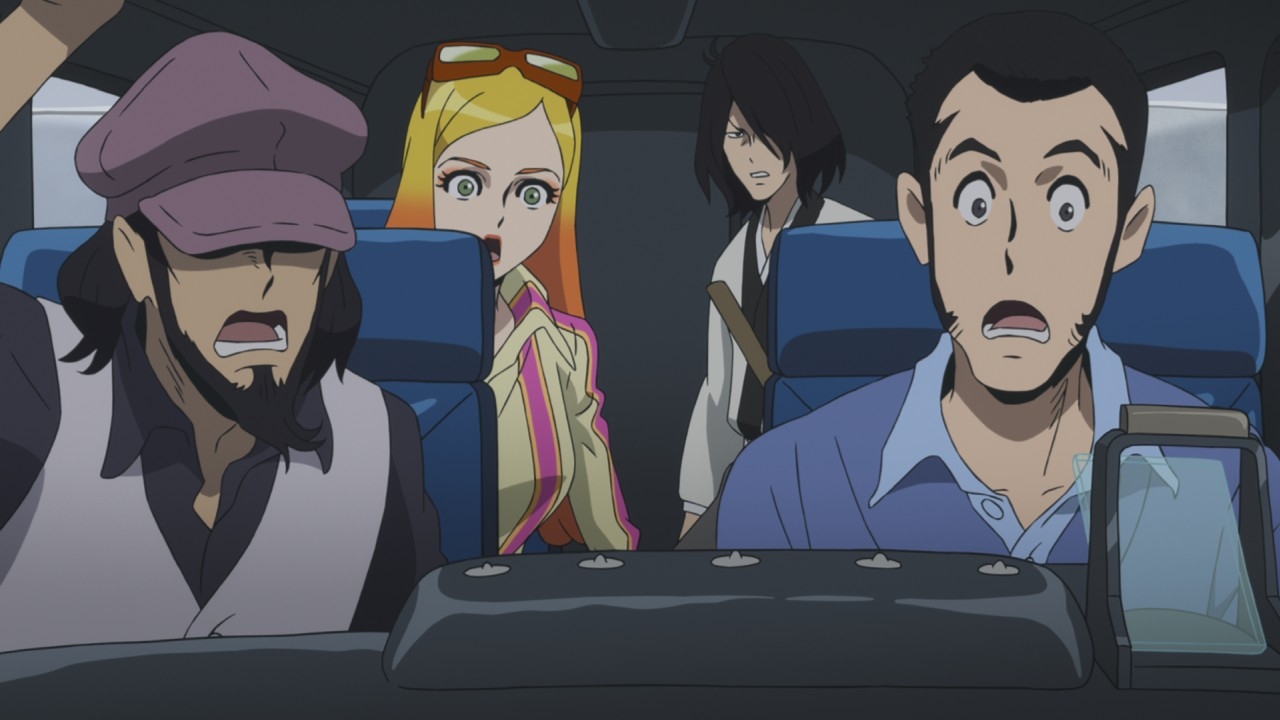
Last week, I interviewed the Japanese director, designer and animator Takeshi Koike, thanks to the British distribution label Anime Limited and the PR company Fetch Publicity. If you want to skip to the interview, then scroll down, but I’ll do some scene setting first.
For some readers, Koike will always be identified with wild car races on alien worlds. In 2009, he directed the manic feature Redline; and took many other roles on that film as well. Before that, he’d already been noticed by fans for his segment of the 2003 anthology The Animatrix. In it, Koike directed, designed and largely animated “World Record,” about a sprinter who runs too fast for the Matrix world.
In my interview, though, I focus on what Koike has been doing since Redline. He’s been working on one of Japan’s most venerable – and creatively flexible – franchises. Hopefully most people reading this article know Lupin the Third. Nearly 60 years old, it’s a franchise about the exploits of the titular lanky master thief, his allies (gunman Jigen, samurai Goemon), his top rival (wily woman Fujiko Mine) and his favorite adversary (tireless cop Inspector Zenigata).
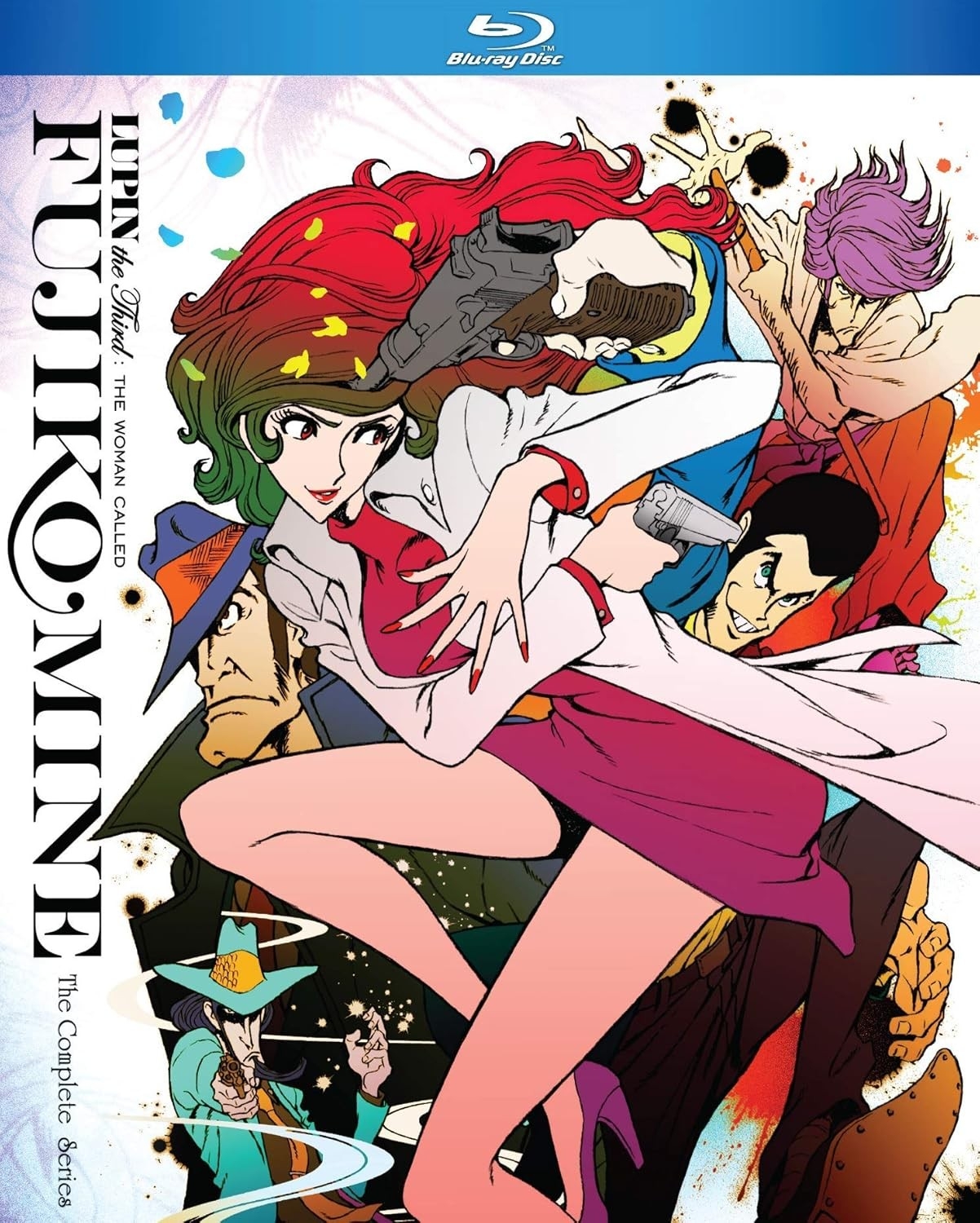 Commencing in a 1967 manga by the artist Monkey Punch (aka Kazuhiko Kato), Lupin had countless anime adventures through the 1970s and 1980s. But by the end of the ‘80s, he went into a slump, mostly confined to annual TV films for the next 20 years. That changed in 2012 with the broadcast of a very different Lupin TV show. Lupin The Third: The Woman Called Fujiko Mine was far more adult and artful than standard Lupin, and more graphically stylish. I was in Japan around the time it came out and remember leafing through a magazine showcasing its incredible art. Much of that art was down to Koike.
As the show’s character designer, Koike re-established Monkey Punch’s characters as adult sophisticates for today’s generation. He was a vital part of Fujiko Mine’s creative vision, but the series wasn’t “a Takeshi Koike Lupin”; those would come later. Fujiko Mine was largely defined by two women; director Sayao Yamamoto, who went on to Yuri!!!! on Ice, and lead writer Mari Okada, who’d write and direct the 2018 feature Maquia: When The Promised Flower Blooms (editor’s note – Okada also wrote on Tonko House’s 2022 Oni: Thunder God’s Tale for Netflix). But Koike would stay with the Lupin franchise after Fujiko Mine, making it distinctly his. (I write about the transition here.)
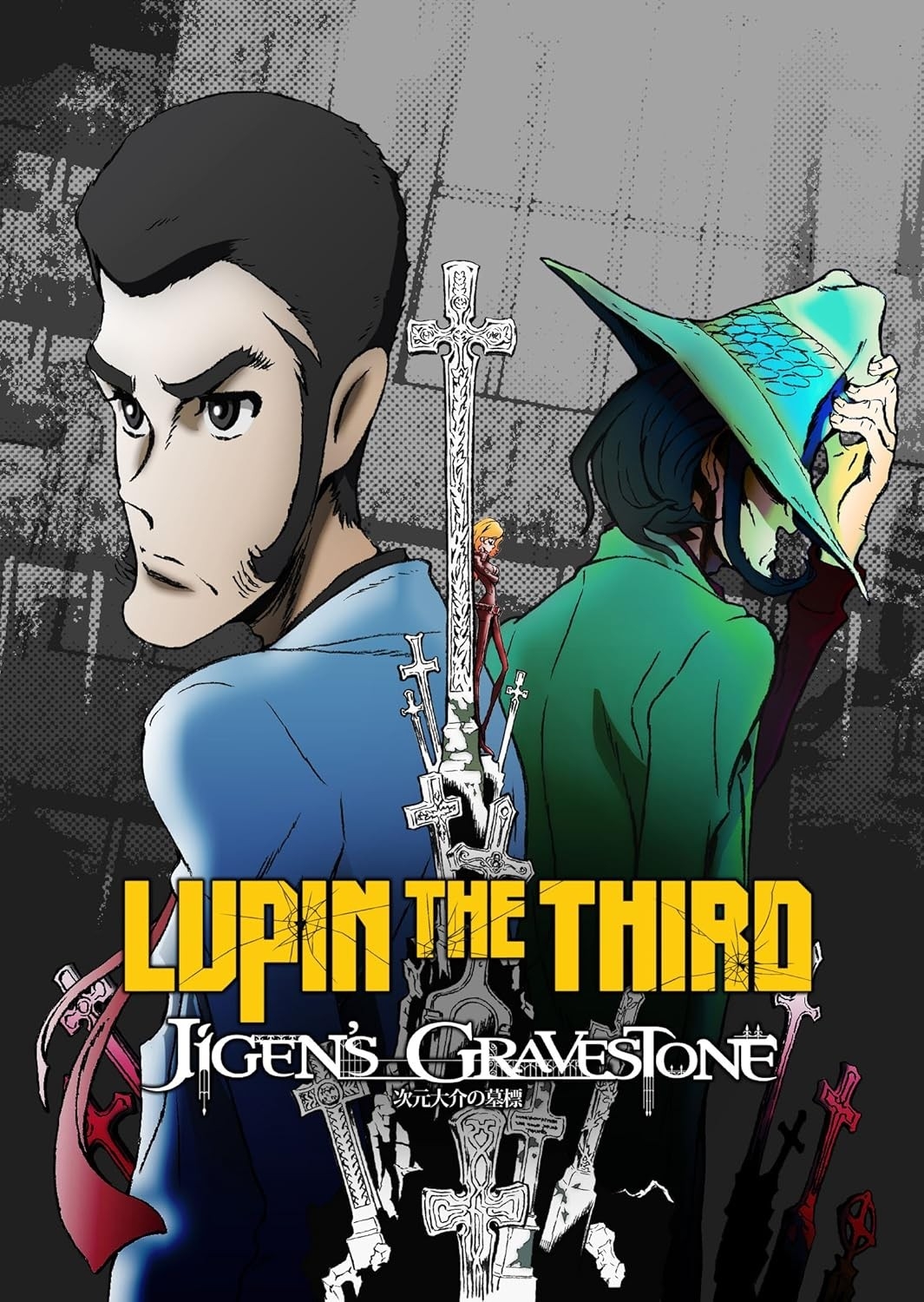
As of writing, Koike has directed five lush, violent, propulsive Lupin films, though only the first three are available in America. Lupin the IIIrd: Jigen’s Gravestone debuted in 2014, followed by Lupin the IIIrd: Goemon’s Blood Spray in 2017 and Lupin the IIIrd: Fujiko Mine’s Lie in 2019. The first two films have US home editions from Discotek Media, and English dubs of all three can be purchased on Prime Video and YouTube.
June 2025 saw the Japanese release of the fourth film, Lupin the IIIrd: Zenigata and the Two Lupins, set in Russia - well, the “Roviet Union.” That was followed a week later by the series’ culmination, Lupin the IIIrd: The Immortal Bloodline, which is on a wilder, grander scale than its predecessors, lavish though they were.
Koike’s previous Lupin films had, at most, very limited cinema releases in Japan. They were mainly distributed on home or streaming media, with runtimes of about 50 minutes each. In contrast, The Immortal Bloodline runs 90 minutes and had a full cinema release in Japan - I saw it at a Shinjuku multiplex in Tokyo. While it ties up threads from its four predecessors, it’s watchable on its own. I went with a friend who’d seen none of the previous Koike films, and still enjoyed it.
 As of writing, The Immortal Bloodline has just had its UK premiere at the Scotland Loves Anime festival in Glasgow, where Koike was guest of honor. In addition, the film will be shown in Edinburgh on the morning of Sunday November 16 (11.30 a.m.), followed by Koike’s first three Lupin films on the big screen that evening (7 p.m.). For links to those screenings and the other anime at Edinburgh, see here. (The festival will also have screenings at London from November 7 to 9, but they don’t include any Lupin or Koike films.)
As for an American release of The Immortal Bloodline (and also Zenigata and the Two Lupins), I hope there’ll be an announcement soon. But as mentioned earlier, Koike’s first two Lupin films are already available in Discotek home editions, and the first three can be streamed on Prime and YouTube.
In the following interview, I’m grateful for the marvelous interpreting of Bethan Jones.
Andrew Osmond: I’ve read that you began working in anime just after you left high school. Looking back, do you think that was a good thing, or do you have any regrets about it?
Takeshi Koike: It was good for me. I knew that I wanted to draw. I knew I wanted to animate. A studio happened to be recruiting, and an animator I respected was working there, so I applied. I think it was good timing.
AO: Can I check the names of the studio and the animator?
TK: It was Madhouse studio. The person I really looked up to, both as an animator and a director, was Yoshiaki Kawajiri, so I was really happy to get to meet him in my interview. [Kawajiri was the feted director of Madhouse action films including Wicked City and Ninja Scroll.]
AO: While you were working on Lupin, did you meet Monkey Punch, and did he discuss any of the films that you were directing?
TK: I met him just once after I’d completed Jigen’s Gravestone. I think it was at a ceremony where he was getting a lifetime award, and he said that he’d seen the film and liked it, and to keep doing what I was doing with Lupin. [Monkey Punch died in 2019.]
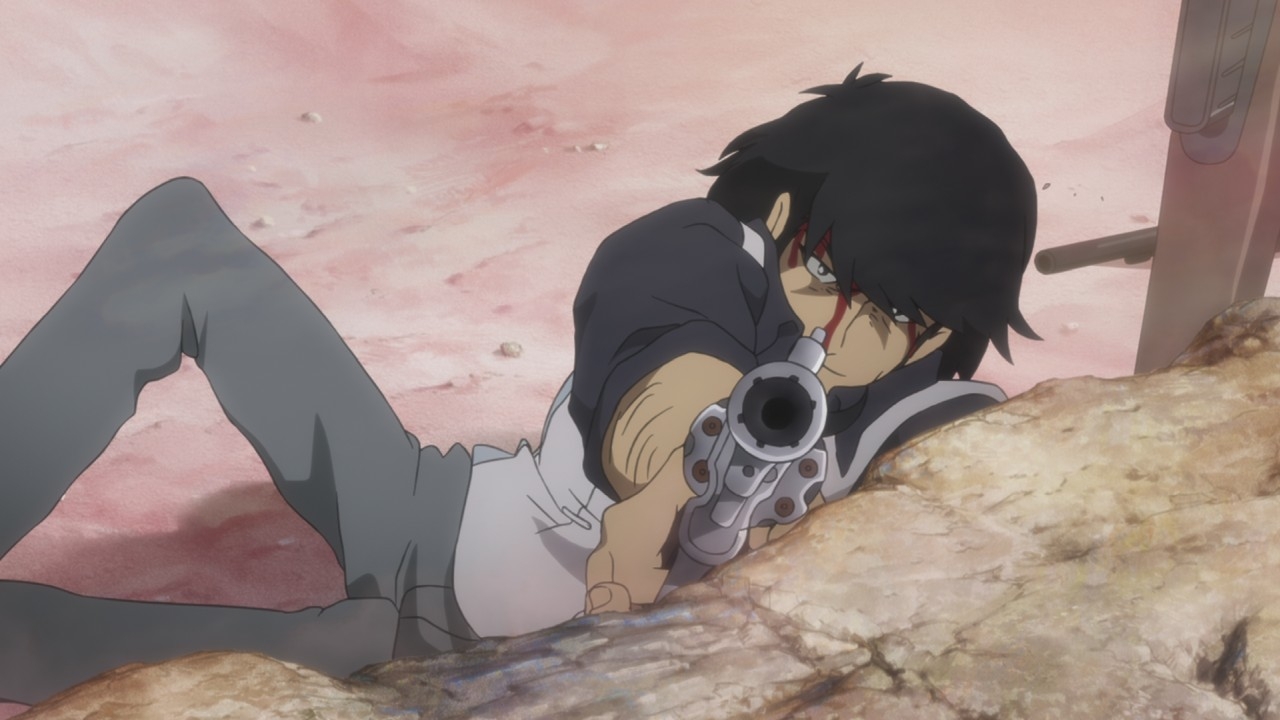
AO: When your film Jigen’s Gravestone was first announced, it was publicized as a “continuation spin off” of The Woman Called Fujiko Mine. However, I've always tended to see Jigen’s Gravestone and your other films as separate from The Woman Called Fujiko Mine. Do you have an opinion on the subject?
TK: I don’t think of it as a spinoff of Fujiko Mine, although it is a spinoff of Lupin. Each Lupin is different, depending on the director, and The Woman Called Fujiko Mine exists as a TV series, as Sayao Yamamoto’s Lupin. And I did the character design for that, and I've carried that on into a new Lupin spinoff.
AO: The new Lupin film takes place on an island where the main characters are placed in dangerous situations. Some Western viewers might think of an old American story and film, The Most Dangerous Game, about people who are hunted on an island. I wondered if the setting of your new film was influenced by that story or by anything else.
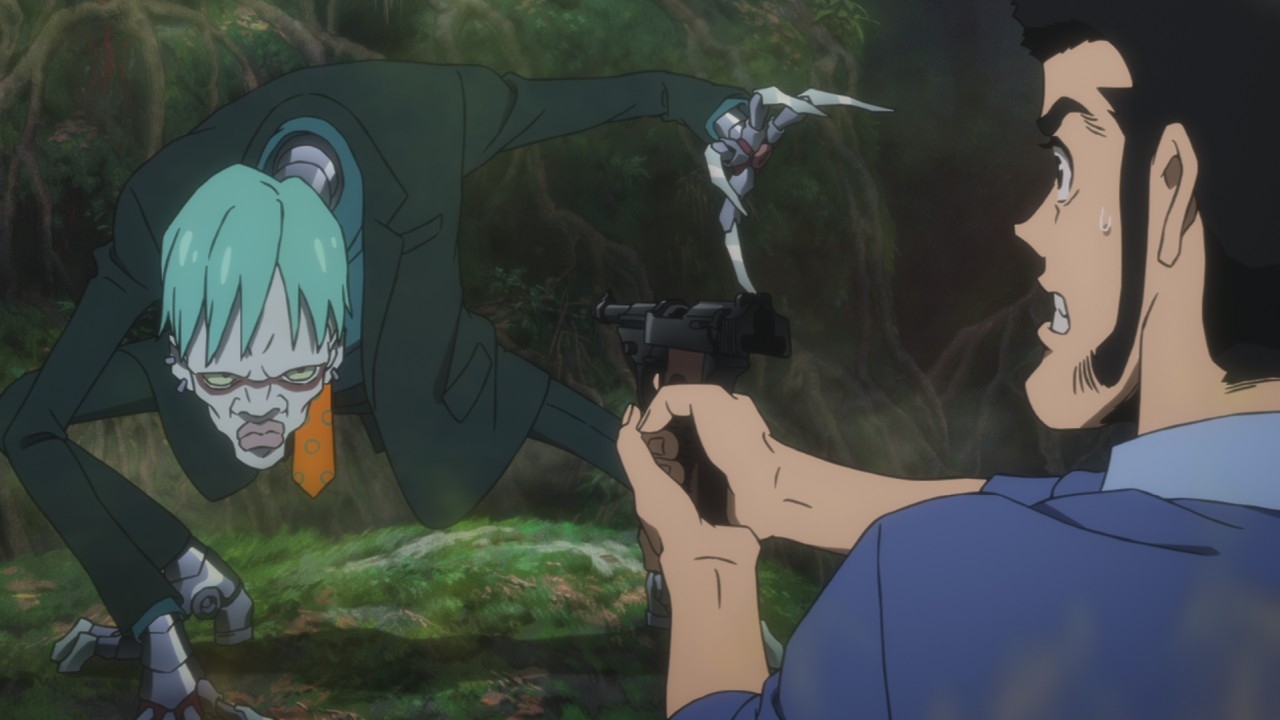
TK: For me, one source of inspiration was the movie of The Island of Dr Moreau: that concept of the doctor doing experiments that he shouldn't be doing, and this sort of weird occult world, with elements of sci-fi. I found it interesting, and that was something that I brought up with the script team when we were talking about the atmosphere and the world view.
AO: Was it the film of Dr. Moreau with Marlon Brando [1996]?
TK: Yes, the Marlon Brando version
AO: You're very famous as an animator. Were there any moments in the new film that you were able to animate yourself?
TK: There are parts that I did myself, yes. Ideally, I would do the finished key animations for those parts, but I didn't really have time on this occasion, so I did the rough key animations for certain bits.
AO: Is it possible to give an example of one part that was roughed out in this way?
TK: The scene where Lupin and Sarifa are talking inside the cave, the heart [it makes sense if you see the film - AO], that was mine.
AO: I want to ask about the main adversary in the film, Muomu. When you first see him, he looks funny, almost a goofy primitive man, and then it turns out that he's a seemingly all-powerful foe. Can you talk about the process by which you came up with this character?
TK: I wanted to create this new mysterious character and the creative advisor, Katsuhito Ishii, came up with this idea of [something like] the giant aliens in Prometheus, who come down to a planet and spread their genes. So that was one visual reference that I used.
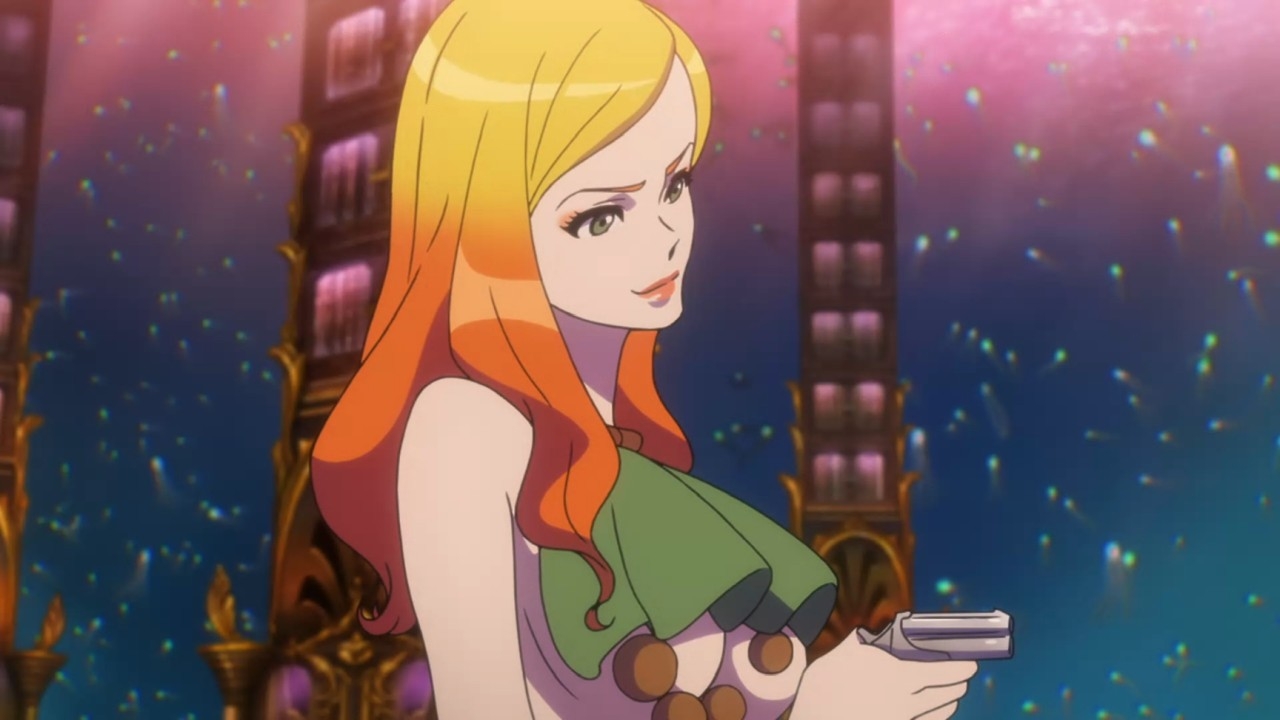
AO: One thing that sets the Lupin films you have directed apart from many other Lupin anime is your use of violence. Do you have any comment on that?
TK: The idea with this series was that it would get a limited cinema release. And so, from the outset, I set out not to worry about what rating it would get, so not to worry about depictions of violence or sex.
AO: According to some sources you contributed to the animation in Quentin Tarantino’s Kill Bill. Is that correct?
TK: That was not me; I did not contribute to Kill Bill.
AO: That you for confirming that! But when I saw your second Lupin film, Goemon’s Blood Spray, I did wonder if some of its action was influenced by Tarantino or Kill Bill.
TK: Of course I love Tarantino movies. Regarding the Kill Bill animation, the creative advisor on the Lupin III movies, Katsuhito Ishii, was involved with Kill Bill’s character design. So, I'd seen his rough designs of the yakuza, and Ishii gave that as an example of the kind of animation he liked, the violent, exciting style of animation. So, the influence is there.
AO: I wanted to ask about your relationship with the animator Kazuhide Tomonogo, who has worked on the Lupin franchise since the 1970s, and has worked on your films. Are there any particular moments or scenes in the new film which Mr. Tomonoga animated?
TK: He was one of the most involved in the animation on this movie. He did the bit where Lupin’s lair blows up at the beginning, and then the scene with Muomu and Goemon fighting under the waterfall - he did the key animations for that.
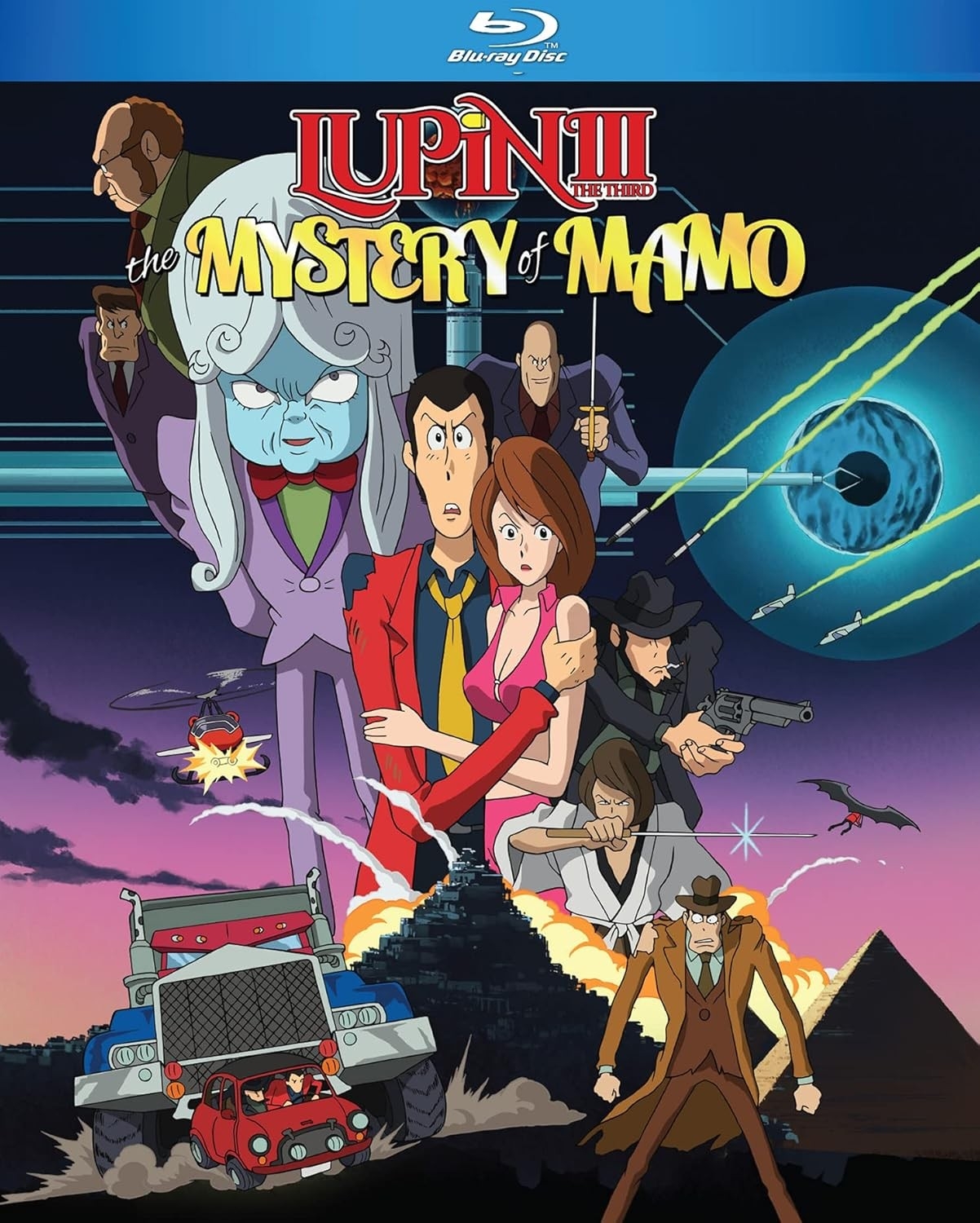 AO: The film has specific story connections to Lupin the Third: The Mystery of Mamo, which was the very first animated Lupin feature film, made in 1978. Why is that film important to you, and why did you use it as a reference points in the new film?
TK: I love the character of Mamo [not to be confused with Mumou], with his big head, his amazing brain and his limitless financial resources as this central underworld figure. I thought it would be great to have him as the final boss. And before I made this film, Mamo appears at the end of the first movie, Jigen’s Gravestone, as the one pulling the strings, and sending the assassins to kill Lupin and co.
GKIDS image
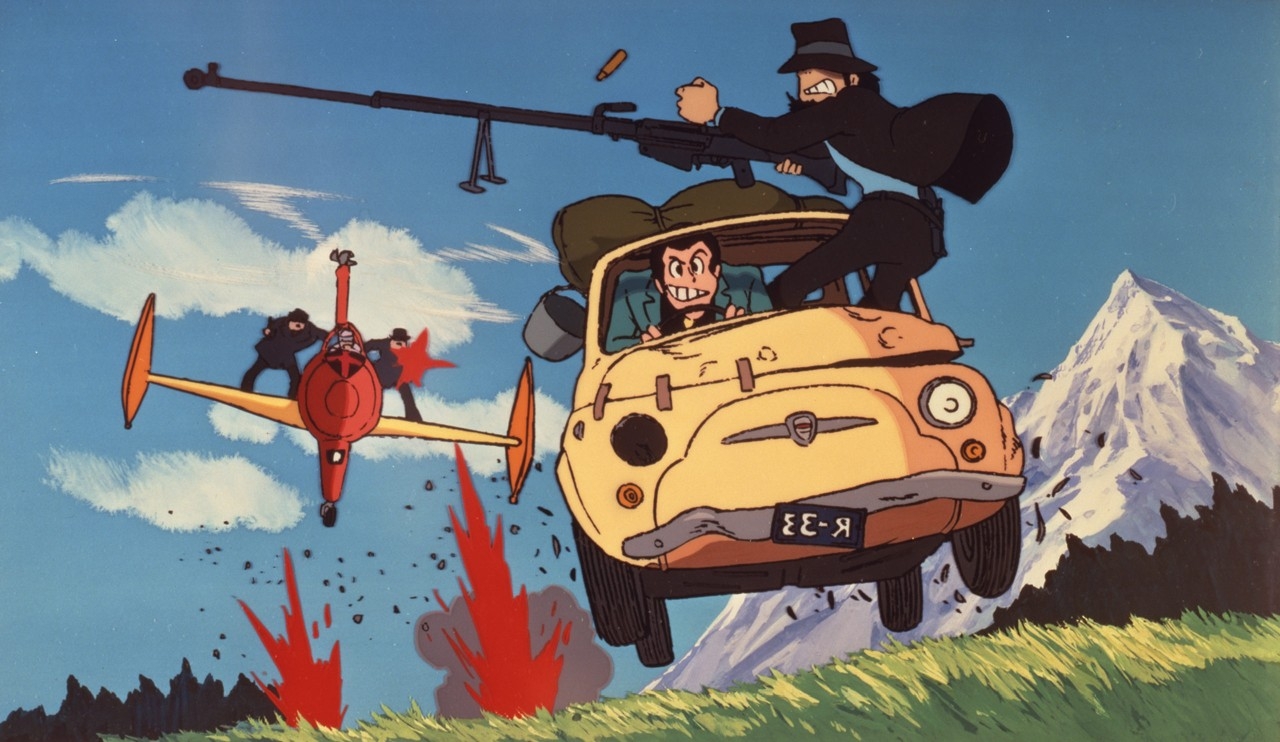
AO: This is something of an otaku question, but there are some animation fans who argue about the 1979 Lupin film, Castle of Cagliostro, which was directed by Hayao Miyazaki. They argue about if it features the “real” Lupin. [Lupin is more heroic and chivalrous in the film than in many of the other Lupin anime.] Do you have any comments?
TK: (Laughs at question.) Lupin lends itself to being made in different worlds with different styles by different directors and I think of all of them as real. I watched Castle of Cagliostro as a child, and I’m always impressed.
AO: I want to ask about your working relationship with the writer Yuya Takahashi, who has scripts credits on all of your Lupin films. How do you work together?
TK: Jigen’s Gravestone was his first Lupin, and it was our first time working together. He usually writes for live-action TV dramas, detective series, and crime. So, I thought that he would be suited to writing for this, and I reached out to him.
AO: Did you discuss the story together, about what will happen in the films?
TK: The way we went about making the series was that the creative advisor, Ishii-san, came up with some rough sketches of characters and their characteristics, and then some situations and a very rough outline of a potential plot, but it was just bones at that stage. And then that went to Takahashi, who turned it into a story.
Following this, my last question was about the third film directed by Koike, Fujiko Mine’s Lie. It’s an excellent variant on John Cassavetes’ classic 1980 live-action thriller Gloria, with its scenario of a traumatized boy who comes under the protection of a woman criminal. The debt was acknowledged by Katsuhito Ishii in a recent interview.
I love Koike’s film, but one twist at the end struck me as impossible given what we’d been shown on screen. It reminded me of the “cheat” resolutions in classic American cliffhanger serials. I asked if this might have been deliberate, the film itself “lying” to the audience. However, Koike’s answer indicated he didn’t think of the film’s ending in those terms. I still like the “lying” idea, though…
DVD Image Links:
https://www.amazon.com/Lupin-Third-Called-Fujiko-Blu-ray/dp/B08T49R3C6/
https://www.amazon.com/Lupin-3rd-Mystery-Richard-Epcar/dp/B09QPFKB3V/
https://www.amazon.com/Lupin-3rd-Jigens-Gravestone/dp/B01BW8OY5U/